Introduction
Online learning has become one of the most powerful tools for personal and financial growth in today’s digital world. From learning web design and affiliate marketing to mastering SEO, digital skills are now more accessible than ever. Anyone with a smartphone or laptop and internet connection can acquire knowledge that once required expensive schooling. But here’s the reality:
Access to learning does not automatically lead to results.
Many people enroll in courses, watch videos, and consume content daily-yet they see little or no progress.
Why?
Because online learning requires more than just information. It requires:
- Focus
- Discipline
- Structure
- Consistency
Without these, learning becomes passive-and passive learning produces weak results.
“Online learning is not just about access-it’s about discipline, structure, and strategy.”
To truly benefit from online education, you must move from consuming content to applying knowledge. This guide will show you exactly how to do that.
Why Most People Fail at Online Learning
Before we jump into solutions, it’s important to understand the problem.
Most learners don’t fail because they are not smart.
They fail because their approach is ineffective.
Common Reasons for Failure
1. Lack of Direction
Many learners start without a clear goal. They jump from one topic to another without knowing what they are trying to achieve.
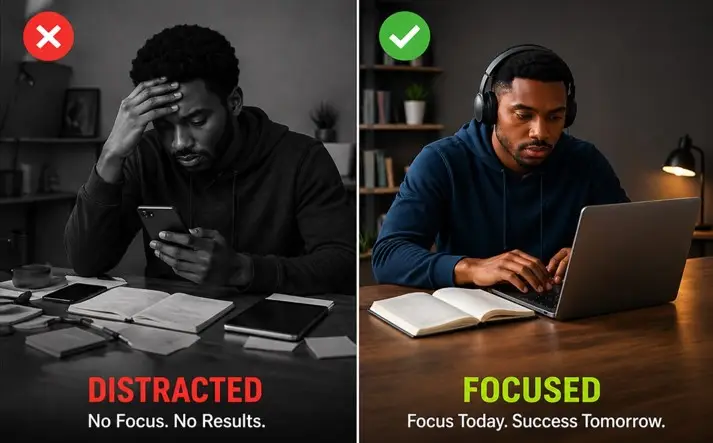
2. Distractions
Social media, notifications, noise, and multitasking reduce focus and slow learning.
3. Information Overload
Too many courses, too many videos, too many opinions-this leads to confusion instead of clarity.
4. No Practice
Watching without doing creates an illusion of learning but no real skill.
5. Inconsistency
Learning for one day and stopping for three days breaks momentum.
Key Insight:
“The problem is not lack of knowledge-it is lack of structured action.”
1. Create a Dedicated Learning Environment
Your environment shapes your behavior more than you realize.
If you study in a space filled with distractions, your brain struggles to focus.
Why Environment Matters
Your brain associates places with activities:
- Bed → Rest
- Couch → Relaxation
- Desk → Focus
If you don’t have a defined learning space, your mind will not take your study sessions seriously.
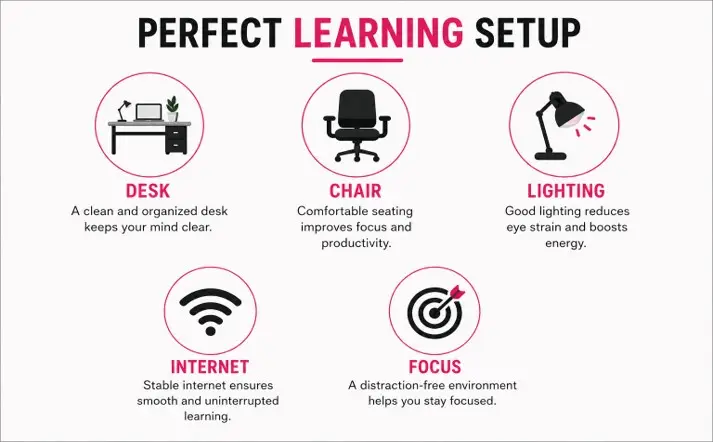
What a Good Learning Environment Looks Like
- Clean and organized
- Quiet or controlled noise
- Good lighting
- Comfortable seating
- Minimal distractions
Practical Improvements You Can Make Today
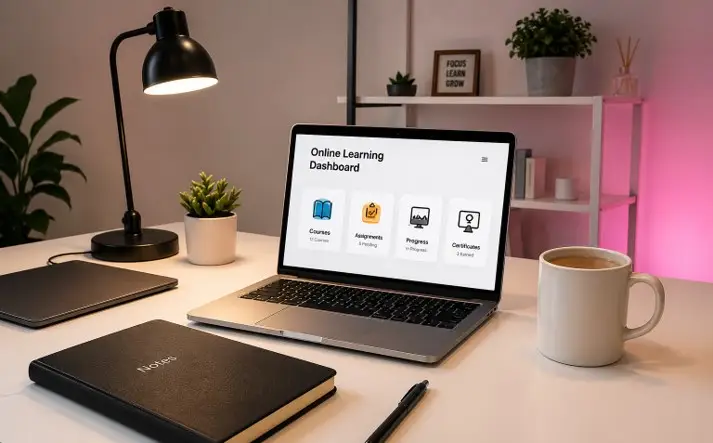
- Clear your desk before studying
- Turn off phone notifications
- Use headphones if needed
- Keep only learning materials nearby
“If your environment is not designed for success, it will quietly lead you to failure.”
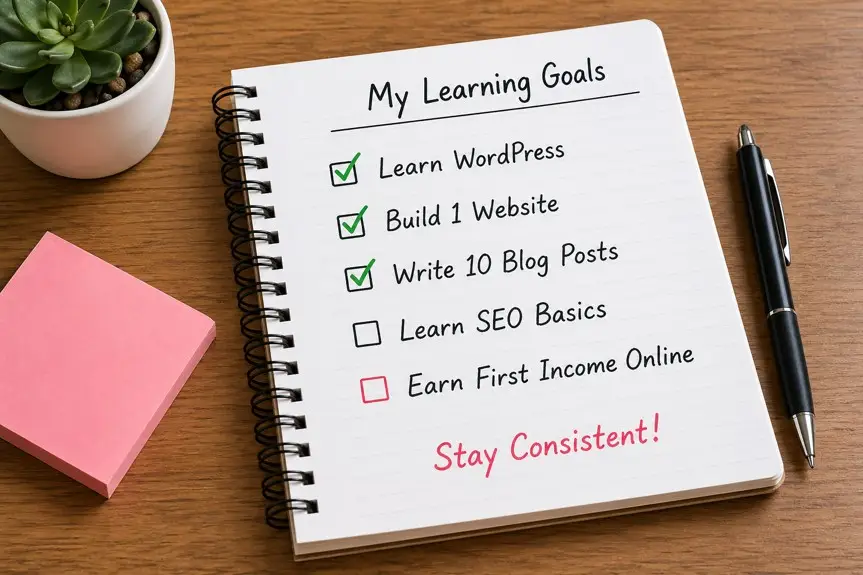
2. Set Clear Learning Goals
One of the biggest mistakes learners make is studying without direction.
When you don’t know where you’re going, you end up going nowhere.
Why Goals Matter
Goals give you:
- Clarity
- Direction
- Motivation
- Measurable progress
Without goals, learning feels confusing and frustrating.
Weak vs Strong Learning Approach
❌ “I want to learn digital skills”
✅ “I want to build a WordPress website in 14 days”
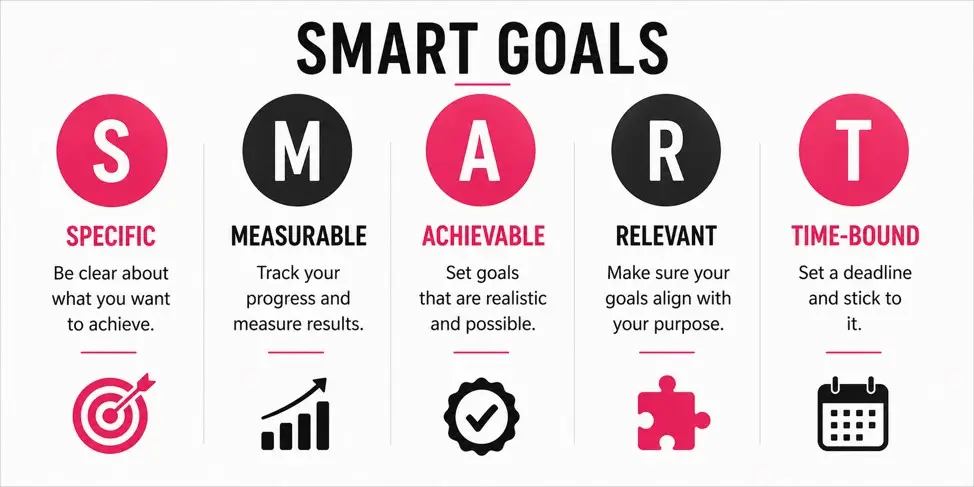
Use the SMART Goal Method
Your goals should be:
- Specific – Clear and focused
- Measurable – Trackable
- Achievable – Realistic
- Relevant – Useful to your goal
- Time-bound – Has a deadline
Example Goals
- Learn keyword research in 7 days
- Publish 3 blog posts in 14 days
- Build a simple website in 2 weeks
“Clarity creates confidence. Vague goals create frustration.”
3. Follow a Structured Learning Plan
Learning randomly is one of the fastest ways to fail.
If you jump from topic to topic, you never build deep understanding.
Why Structure Is Important
Structure helps you:
- Know what to learn next
- Track progress
- Avoid confusion
- Stay motivated
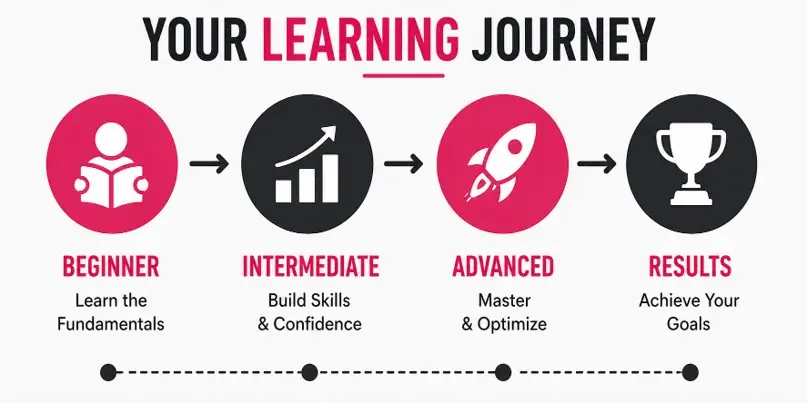
How to Build a Simple Learning Plan
Step 1: Choose One Skill
Focus on one thing at a time.
Step 2: Break It Into Levels
- Beginner
- Intermediate
- Advanced
Step 3: Assign Timeframes
Example:
- Week 1: Basics
- Week 2: Practice
Example (Affiliate Marketing)
Week 1 → Understanding basics
Week 2 → Choosing niche
Week 3 → Building website
Week 4 → Creating content
“Structure is the bridge between effort and results.”
4. Practice What You Learn Immediately
This is where most learners fail.
They consume content-but don’t apply it.
Why Practice Is Everything
Watching videos creates awareness.
Practice creates skill.
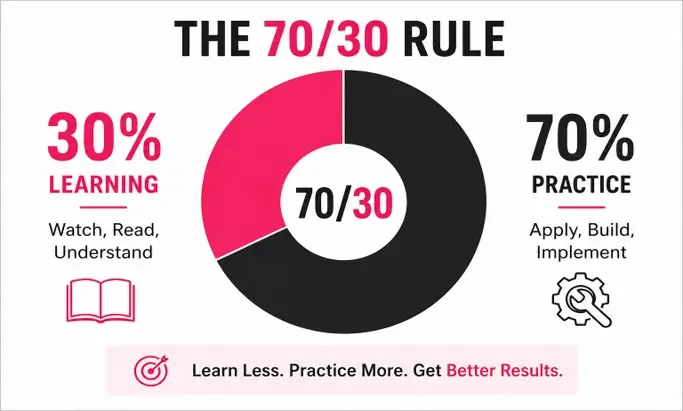
The 70/30 Rule
- 30% Learning
- 70% Practice
Example
If you are learning:
- Web design → Build pages
- Blogging → Write articles
- SEO → Optimize content
What Happens Without Practice
- You forget quickly
- You lack confidence
- You never become skilled
“You don’t truly understand something until you use it.”
5. Stay Consistent and Avoid Burnout
Consistency is more powerful than intensity.
You don’t need to study all day.
You need to study regularly.
Why Consistency Works
- Builds momentum
- Improves retention
- Creates discipline
Best Approach
- Study 1-2 hours daily
- Avoid long breaks between sessions
- Track your progress
Avoid Burnout By
- Taking breaks
- Sleeping well
- Keeping sessions realistic
“Consistency beats motivation every time.”
Bonus Strategies for Faster Learning
To accelerate your growth:
1. Join Learning Communities
Being around others keeps you accountable.
2. Ask Questions
Don’t stay stuck-seek clarity.
3. Teach What You Learn
Teaching improves understanding.
4. Track Your Progress
Measure improvement weekly.
Common Mistakes to Avoid
Mistakes
- Learning too many things at once
- Not practicing
- Giving up too early
- Expecting fast results
Real-Life Application Example
Imagine two learners:
Learner A:
- Watches videos daily
- Does nothing
Learner B:
- Learns one concept
- Applies immediately
After 30 days:
Learner B is skilled. Learner A is still confused.
Summary
To improve your online learning experience:
- Create a focused environment
- Set clear goals
- Follow a structured plan
- Practice immediately
- Stay consistent
Conclusion
Online learning has the power to transform your life-but only if you approach it correctly.
You don’t need:
- More courses
- More videos
- More information
You need:
- Action
- Discipline
- Structure
Your success depends on what you do after learning-not just what you watch.
For more guidance on online education, you can also explore the Coursera online learning guide. You can also explore our eBooks page to find beginner-friendly digital learning resources.
Interactive Section
- What skill are you learning?
- What is your biggest challenge?
- Which tip will you apply today?